Beyond the Annual Report: Why Money Doesn’t Equal Impact
December 22, 2025 | Blog
Many people believe that more money automatically translates to a more significant impact when donating to a charity. While funding is essential, simply writing a larger cheque doesn’t guarantee proportionally better results. For those serious about achieving the best possible outcomes with their resources, it’s crucial to understand why this is the case and where to focus efforts for maximum effect.
The Heckman Curve: A Lesson in Return on Investment
Nobel laureate economist James Heckman’s work on human development offers a powerful framework for understanding the limitations of simply pouring money into an issue. The core principle of the Heckman curve demonstrates that the return on investment (ROI) for interventions is highest when they are made early.
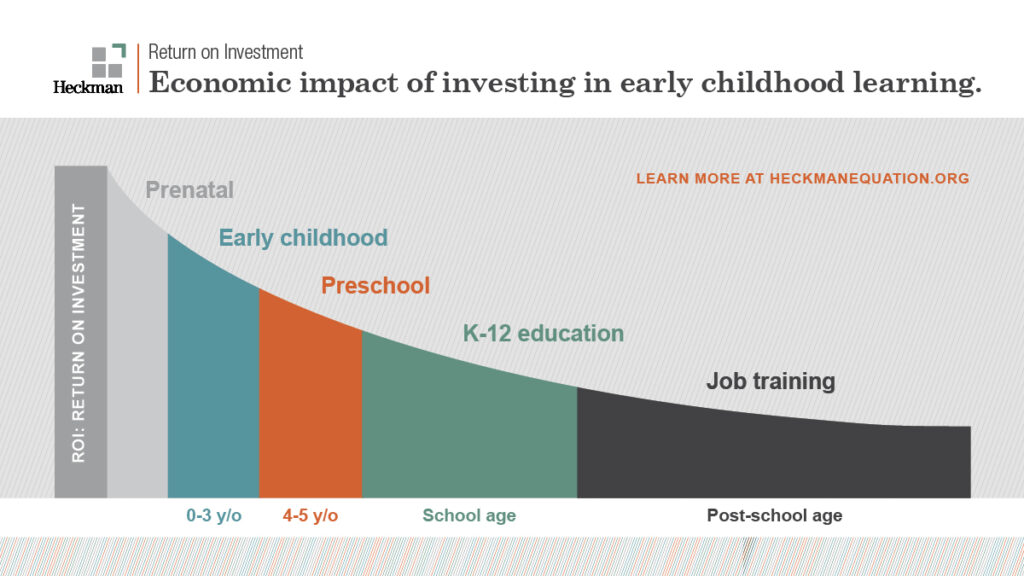
Imagine the curve: the earlier the intervention—such as quality early childhood education—the steeper the positive impact on future outcomes like educational attainment, income, and health. This suggests that simply increasing funding later in a problem’s lifecycle, while helpful, will often yield diminishing returns compared to strategically timed, upstream investments.
In the charity sector, this translates to the reality that a large donation focused on a late-stage, surface-level solution may be less effective than a smaller, more strategic investment in foundational work. Money alone is not enough; the application (use of capital), strategic focus (market analysis) and timing (failing forward) of that money are what drive true impact.
Three Areas for Donors to Focus for Better Results
If maximizing impact is the goal, donors must look beyond the simple dollar amount and focus on areas that foster organizational health, deep understanding, and effective adaptation.
1. Application of Funds: Paying Adequate Salaries
Effective philanthropy starts with people. Donors must right-size funding not only to the solution, but to the work required to deliver it. That means funding skilled professionals and organizational capacity—not just outputs.
The belief that nonprofit staff should accept below-market wages undermines impact. When organizations pay adequate, competitive salaries:
- Talent Retention Improves: Charities retain experienced, high-performing staff who know the issue area deeply, reducing costly turnover and increasing institutional knowledge.
- Expertise is Attracted: High-impact work requires specialized skills (e.g., data analysis, complex program management, policy advocacy). Fair compensation allows charities to attract top-tier professionals who would otherwise go to the private sector.
- Burnout Decreases: Financial stability allows staff to focus fully on mission delivery.
Three Areas for Donor Focus:
- Support organizations that demonstrate a commitment to fair compensation and invest in professional development for their staff. This funding is an investment in the long-term effectiveness of the organization itself.
- Encourage grantees to include real salary costs on their funding applications.
- Discourage comments about how “100% of your donation will go to the project or end result.” Commitments can be a flag that organizations are under-paying their staff.
2. Strategic Focus: A Better Understanding of the Market/Issue Area
Charitable work operates within a complex ecosystem – “the non-profit marketplace.” Donors who treat philanthropy as a serious investment fund organizations that understand the dynamics, constraints, and competitive landscape of their issue area.
Having a strategic focus is more than having a funding plan and/or a Theory of Change. It is about clearly knowing the end-goal or social change that is desired.
This involves looking for organizations that:
- Collect and Use High-Quality Data: They don’t rely on anecdotes but use rigorous metrics to measure success, failure, and necessary course correction.
- Address Root causes: They focus upstream on systemic drivers, not just symptoms (a core lesson from the Heckman curve).
- Understand the Time Horizon: They can clearly articulate how their activities conducted at certain points in the trajectory of the project lead to the desired outcome, showing a clear, logical pathway from resources to impact.
Three Areas of Donor Focus:
- Fund organizations’ research, monitoring, and evaluation budgets. Ask about their assumptions and how they test their programs against the realities on the ground. This will also allow you to be on top of the growing challenges in the sector and also provide you with insights into who else is working in this space, either as a funder or an agency.
- Fund and then request impact report summaries that clearly outline these findings. Read the reports that are provided and create lines of communication so that you can engage in further inquiry and support.
- Consider the time horizons of the project and organization. Align expectations with project timelines, recognizing that social ROI often materializes over years, not grant cycles.
Strategy requires patience, clarity, and discipline.
3. Embrace Failure and Support Learning Environments
In the social sector, complex problems like climate change, poverty, or disease often require innovative, unproven approaches. This means that failure is an unavoidable part of the innovation process. However, many organizations are incentivized by donors to only report “successes.” It also requires that the capital investment model is flexible enough to withstand pivots. This includes the types of investments. Move from solely providing grants and charitable contributions to alternative forms of capital like debt.
Effective organizations:
- View Failure as Data: They rigorously analyze what went wrong, adapt, and share those lessons widely to prevent others from making the same mistake.
- Have Flexible Funding: Donors provide unrestricted or “risk capital” grants that allow organizations to pivot, experiment, and innovate without fear of losing their funding base.
- Foster Psychological Safety: Staff surface problems early when donors reward honesty, not perfection.
Three Areas of Donor Focus:
- Be willing to fund pilots and experiments, knowing that not all will succeed.
- Encourage organizations to share their “lessons learned.” Offer funding for organizational reflection retreats where learning is prioritized over immediate results.
- Provide alternative financing models to organizations like GROANS (grants→ loans), catalytic funding, debt financing, matching funds or seed capital.
By shifting focus from the size of the cheque to the strategic application of resources in these three areas, donors can ensure their generosity translates into sustained, meaningful impact, moving beyond simply spending money to solving problems.
Most importantly, these agencies are the industry experts. You chose to support them because you believe this to be true. Fund them so they can be those industry experts.